How to Protect Your Damaged Walls
How to Protect Your Damaged Walls
Wall damage is one of the most common problems faced by homeowners, commercial property owners, and industrial facilities. Cracks, damp patches, peeling paint, mold growth, and water seepage not only reduce the beauty of your property but can also weaken the structure over time.
At AMIS Consultant, we provide expert wall repair, waterproofing, and protective coating solutions that help restore damaged walls and prevent future deterioration. With the right materials and timely maintenance, your walls can remain strong, durable, and visually appealing for years.
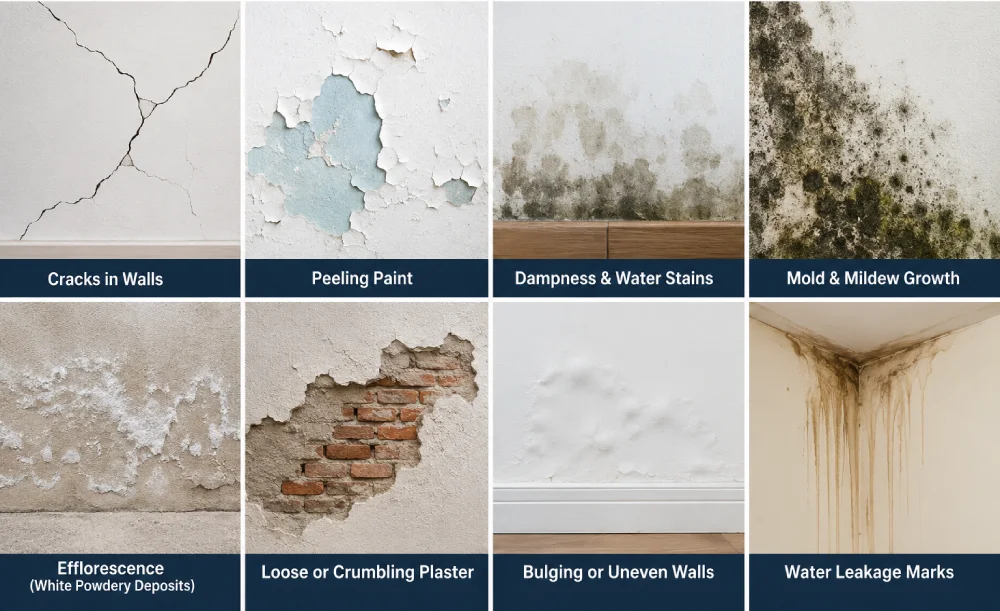
Common Signs of Wall Damage
- Wall cracks
- Damp patches
- Water seepage
- Paint peeling or blistering
- Mold and mildew growth
- White salt deposits (Efflorescence)
- Hollow plaster
- Surface discoloration
- Bubbling paint
- Weak or crumbling plaster
What Causes Wall Damage?

Water Seepage
Continuous moisture penetration through roofs, terraces, bathrooms, or external walls causes dampness and weakens plaster.
Poor Waterproofing
Buildings without proper waterproofing are more vulnerable to moisture damage.
Structural Movement
Natural settlement or foundation movement often creates cracks in walls.
Weather Exposure
Rain, humidity, UV rays, and temperature changes gradually deteriorate wall surfaces.
Poor Construction Materials
Low-quality cement, plaster, or improper application can reduce wall durability.
Plumbing Leakage
Hidden pipe leakage inside walls is one of the leading causes of damp patches.
Types of Wall Damage
Hairline Cracks
Small cracks caused by plaster shrinkage or temperature variation.
Structural Cracks
Deep cracks that may indicate structural movement and require professional inspection.
Damp Walls
Walls affected by continuous moisture resulting in stains and peeling paint.
Peeling Paint
Occurs due to trapped moisture, poor surface preparation, or inferior paint quality.
Mold & Mildew
Fungal growth caused by excessive moisture and poor ventilation.
Efflorescence
White powder deposits formed when salts migrate through damp walls.
Effective Ways to Protect Damaged Walls
1. Repair Wall Cracks Immediately
Seal cracks before they expand and allow moisture to enter.
Benefits:
- Prevents water penetration
- Stops crack growth
- Improves wall strength
2. Apply Waterproofing Solutions
Professional waterproofing creates a protective barrier against moisture.
Suitable Areas:
- Exterior walls
- Basement walls
- Bathrooms
- Kitchens
- Water tanks
- Terraces
Benefits:
- Prevents leakage
- Reduces dampness
- Extends wall life
3. Remove Dampness Before Painting
Painting over damp walls only hides the problem temporarily.
Proper treatment includes:
- Moisture inspection
- Waterproof repair
- Surface preparation
- Primer application
- Quality exterior/interior paint
4. Use High-Quality Construction Chemicals
Construction chemicals improve adhesion, durability, flexibility and water resistance.
Recommended products include:
- Crack fillers
- Waterproof coatings
- Polymer-modified mortars
- Protective sealants
- Repair compounds
- Waterproof primers
5. Improve Drainage Around the Building
Poor drainage often causes foundation and wall dampness.
Ensure:
- Proper roof drainage
- Functional rainwater pipes
- Ground slope away from walls
- Clean gutters
6. Schedule Regular Wall Inspections
Routine inspections help identify problems before major damage occurs.
Inspect for:
- New cracks
- Damp spots
- Paint peeling
- Mold growth
- Water leakage
Benefits of Protecting Your Walls
- Increases building lifespan
- Prevents costly repairs
- Improves indoor air quality
- Protects structural integrity
- Enhances property appearance
- Prevents mold growth
- Maintains property value
- Reduces maintenance costs
- Improves energy efficiency
- Provides healthier living conditions